What is a neobank? Inside a modular financial app
A neobank moves everyday finance into an app. Some fintechs combine bank transfers, stablecoins, wallets, cards, yield products and credit in one interface. Each service still has its own provider, terms and risks.
A neobank app can assemble licensed banking, payments, cards, wallets and investment-like services in one interface. Different companies and technologies may operate each layer.
01 · Start with the label
A neobank may be a bank, or it may use banking partners
In ordinary usage, a neobank is a digital-first financial service built around a mobile or web app. Some neobanks hold banking licences. Others are fintech companies that distribute accounts, cards or payments through licensed banks, e-money institutions, issuers and processors.
That distinction matters. A clean app does not tell you who legally holds the funds, whether a balance is a deposit, what protection applies, or which company handles a failed transfer. The FDIC makes the same practical point in its guidance on banking with third-party apps.
Traditional bank vs neobank
Compare the companies and systems behind the app
02 · How one app coordinates several services
One app can route a payment across several providers
A conventional banking app usually exposes the products the institution already owns. A modular fintech can start with an action such as holding, exchanging, sending, earning, borrowing or spending, then select the relevant balance and provider.
That can mean choosing which asset funds a purchase, keeping a wallet balance under self-custody until payment, creating a separate vault for yield, receiving money over local bank rails and sending it out over another network. Different modules create choices, but every module still operates under its own rules.
One app, several layers
The app should show who operates each layer
- 01ExperienceOne interface
Balances, cards, transfers, exchange, permissions and automation
- 02Money containersSeveral kinds of balance
Bank deposit · e-money · stablecoin · wallet asset · vault share
- 03Financial modulesChoose what the money should do
Hold · convert · earn · borrow · spend · send
- 04Access railsConnect old and new networks
ACH · SEPA · Faster Payments · card networks · blockchains
03 · Where value can accrue
Returns can come from the balance, the purchase or the credit structure
A fintech may combine deposit interest or vault yield with card rewards and a lending strategy. Compare each stream separately because the fees, liquidity, counterparties and risk to principal can differ.
A balance can produce a return
That return might be bank interest, account cashback, exchange savings or DeFi vault yield. The labels sound similar; the legal claim, liquidity and risk are not.
Ask where the return comes from and whether principal or access can change.A purchase can earn a reward
Cashback, points and token rewards can return some value after eligible spending. Rates, caps, paid tiers, merchant exclusions and the reward asset determine what it is worth.
Subtract plan, FX, conversion and funding costs before calling it a gain.Collateral can fund spending without an immediate sale
A credit line can leave an asset in place while another balance funds the card. The user keeps market exposure and takes on debt.
Debt adds interest, repayment, loan-to-value and liquidation risk.Real net value = balance return + usable rewards − plan fees − conversion costs − borrowing costs − losses from risk
04 · Tokenisation and Web3
Tokenised assets can carry transfer and settlement rules on the same ledger
Tokenisation represents money or another claim on a programmable ledger. Instead of keeping ownership in one database and sending instructions through several intermediaries, the system can attach transfer and settlement logic to the digital asset itself.
That enables composability: a wallet can hold an asset, a smart contract can route it into a vault, the vault position can support collateral, and a card module can convert an eligible balance at payment time. The BIS describes a ledger that combines money, assets and programmable transactions.
Decentralisation changes who can operate or verify the system. It does not make every layer decentralised. A self-custody wallet can still connect to a regulated card programme with KYC, an issuer, a processor and the normal card network between the wallet and the merchant.
Example money flows
Modules can be connected into specific money flows
Everyday stablecoin loop
- 1Salary or bank transfer
- 2Fiat or stablecoin account
- 3Card or payout
- 4Cashback
Useful when bank rails and stablecoin settlement live in the same app.
Permissioned wallet spend
- 1Self-custody wallet
- 2Asset-specific allowance
- 3Card payment
- 4Revoke or adjust
The spending permission can be narrower than transferring the whole balance to a custodian.
Collateral-backed spending
- 1Vault or collateral
- 2Credit line
- 3Card balance
- 4Repay and unlock
The asset may remain invested, but the user now has debt and liquidation exposure.
05 · From our catalogue
Four catalogue products with different account structures
KAST, MetaMask Card, Rebind and ether.fi Cash use custodial accounts, self-custody wallets, smart accounts and DeFi-connected credit in different ways. Comparing them shows where custody, settlement and credit sit in each flow.
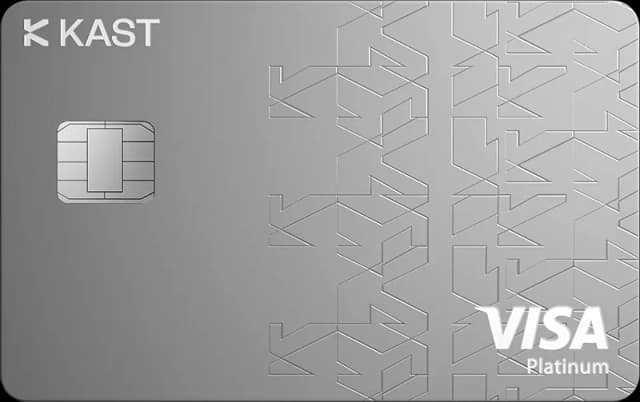
KAST combines bank-style transfers with stablecoin balances
KAST puts fiat and crypto funding, local and global transfers, card spending, cashback and optional yield vaults inside one product surface.
- Fiat and crypto funding routes feed the same account layer.
- Local and global transfer rails move money in and out.
- The card and payout routes make the balance usable for payments and outbound transfers.
- Optional vaults add a separate yield module instead of changing the card balance itself.
This is a custodial setup. Vault returns are variable, not guaranteed and not deposit-insured; moving money into a vault changes the risk and liquidity profile.

MetaMask Card spends through revocable wallet permissions
Supported assets stay under self-custody until payment. Revocable per-token spending caps limit the card's authority, and eligible yield-bearing balances can also fund card spend.
- The wallet remains the account boundary before a payment.
- A spending permission can be narrower than handing over the whole balance.
- Eligible Aave-based balances can be spendable while they remain in a yield module.
Self-custody affects who controls assets before payment. KYC, issuer rules, conversion, settlement and smart-contract risk still apply.

Rebind separates its app account from the card Safe
Rebind's account supports bank transfers and savings, while a separate Safe holds EURe for Visa payments. An account balance does not automatically become a spendable card balance.
- The card Safe holds the EURe allocated to card spending.
- Move EURe from the Rebind account to the card wallet before making a purchase.
- Savings strategies and account bank transfers remain separate services.
The flow depends on KYC approval, issuer controls, supported tokens, Gnosis Chain availability and smart-contract modules. Any one of these can interrupt access or payment.

ether.fi Cash links card payments to vault balances and collateral
ether.fi Cash connects bank rails, Direct Pay from eligible balances, Liquid vault strategies and a credit line that can borrow against supported collateral.
- Eligible Liquid USD can remain in a separate yield balance and still fund card spend.
- Other vault assets can support a collateral route instead of being sold for a purchase.
- The app coordinates deposits, vaults, borrowing and card settlement.
- The net outcome depends on card rewards, vault yield and borrowing costs.
Yield can vary and principal can fall. Borrowing creates debt and adds interest, loan-to-value and liquidation risk; neither return nor collateral value is guaranteed.
06 · Questions that reveal real control
Check who can move, freeze, revoke or recover funds
A feature list says little about control. Check who holds the funds, which balance pays, when conversion happens, which permission can be revoked and what happens if one provider stops working.
- 1
What exactly do I own: a bank deposit, e-money claim, token, vault share or loan balance?
- 2
Who can freeze, delay or reverse access at each layer?
- 3
Can I move funds to another wallet or provider without selling or closing the whole account?
- 4
Is the advertised return interest, cashback, token incentives or variable protocol yield?
- 5
Which fees appear when funding, converting, spending, borrowing and withdrawing?
- 6
What recourse exists if the app, partner bank, issuer, chain or smart contract fails?
Product direction
Banking products are becoming easier to reassemble
Regulated money and payment networks can provide trust and reach. Software, tokenisation and wallets add programmable rules and more choices. A hybrid product can let a user choose a custody model, change a transfer or yield module and still pay a normal merchant.
A neobank can present the workflow first: fund an account, choose a balance, spend, send or borrow. Useful products will expose those choices while naming the provider and risk behind each one.
FAQ
Quick answers
Can Rebind savings pay for a card purchase directly?
No. Transfer EURe into the separate card Safe before spending. Rebind replaces the Gnosis Pay consumer card as this guide's smart-account example; Gnosis is winding down that consumer product by the end of 2026.
Is every neobank a licensed bank?
No. Some are licensed banks; others are nonbank fintechs using licensed partners for deposits, cards or payments. Check the legal entity for the specific product and country.
Does self-custody mean no KYC?
No. Control of assets before payment and eligibility for a regulated card programme are separate questions.
Is stablecoin yield the same as bank interest?
No. The source of return, legal claim, liquidity, insurance and principal risk can all differ. Treat each yield product as its own financial arrangement.
Can the same money earn yield and fund a card?
Some products support a spendable yield-bearing balance; others require a separate deposit or withdrawal first. Verify the exact flow, timing and risk.
Are neobanks automatically cheaper?
No. A free plan can still have conversion, FX, funding, withdrawal or borrowing costs. Compare costs across the complete money route.
Official background reading
The concepts behind the guide
These primary sources provide the regulatory and technical context for the general explanations above.
Banking with third-party apps
How nonbank fintech apps can rely on partner banks, and why the underlying institution and protection regime matter.
Open official source BISBlueprint for the future monetary system
A primary-source explanation of tokenisation, programmability and composable financial transactions.
Open official source Council of the EUDigital finance, DLT and tokenisation
Plain-language definitions of digital finance, distributed ledgers and tokenised assets.
Open official source ESMADecentralised finance in the EU: developments and risks
Risks associated with smart contracts and permissionless financial infrastructure.
Open official sourceUse the catalogue
Compare the full money flow behind each card
Use the catalogue to inspect custody, money-in and money-out routes, optional yield, credit mechanics, fees and the approved sources behind each product.